


Tank Guns
TANK GUNS USED BY FINNISH ARMY IN 1919 - 1945
37 Psv.K/18
(37 mm tank gun M/18 Puteaux)
(French 37 mm SA-18 Puteaux)
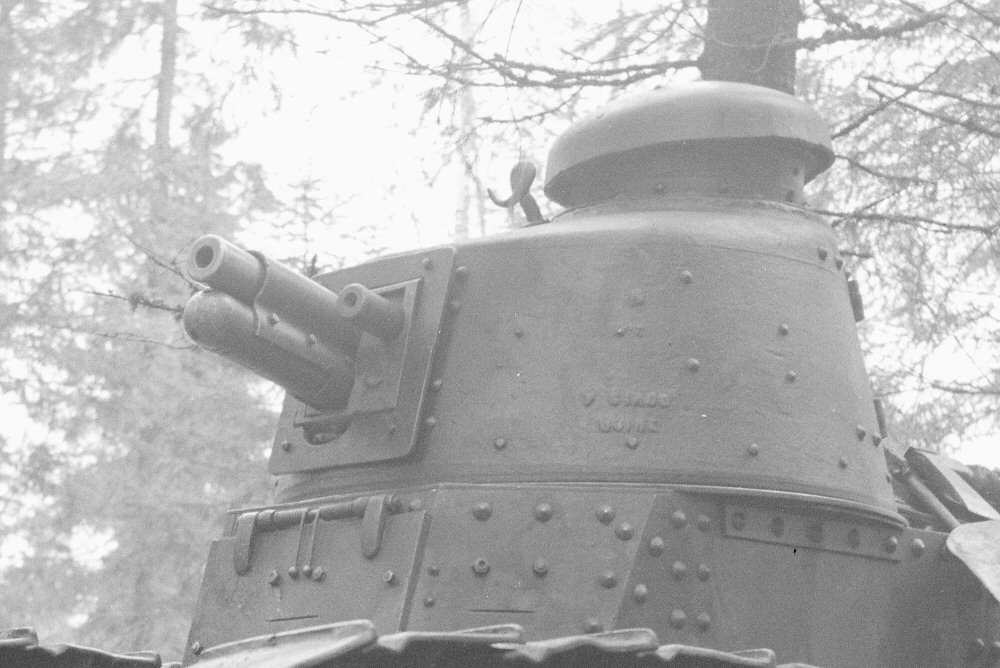
PICTURE: 37 PsvK/18 (37-mm SA-18 Puteaux) tank gun on turret of Renault FT 17 tank. The
turret is version built by Girod for these tanks. Notice simple optical sight in next of the gun. (SA-kuva
photo archive, photo number 10972). CLICK THUMBNAIL TO SEE LARGER PIC (157 KB).
|
Calibre: |
37 mm x 94 R |
||
|
Barrel length: |
L/21 |
||
|
Rate of fire: |
10 shots/minute (practical maximum) |
||
|
Elevation: |
? |
||
|
Muzzle velocity: |
360 - 440 m/sec |
||
|
Magazine: |
None |
||
|
Max. range: |
2500 m |
||
|
Optics: |
optical sight with 1X magnification |
||
|
Country of origin: |
France |
||
|
Ammunition types: |
HE and HE-T |
||
|
APHE and APHE-T |
|||
|
AP-T |
|||
|
grape-shot (for short-range defence against infantry) |
Finnish use: This tank gun was used in 15 Renault FT 17 tanks 1919 - 1943.
This was French 37-mm SA-18 Puteaux tank-gun. Finnish Army used these tank guns in Renault FT 17 tanks. Year 1919 Finnish Army bought 32 tanks from France, 14 of these 32 tanks were equipped with these 37-mm guns. The next year France delivered two more Renault FT 17 tanks, one of these two tanks was armed with this gun, bringing the total number of these tank guns in Finnish use to 15 guns. They were also temporarily used to equip some Vickers 6-ton tanks for war games for summer 1939, but in that case the gun mounting was so weak, that it allowed only shooting blanks. Considering it was one of the first tank guns ever 37 Psv.K/18 (as Finnish Army called this gun) was surprisingly reliable and accurate, but for practical reasons (one soldier doing both reloading and shooting) the practical rate of fire was not very high (about 10 shots/minute at most). It had been equipped with simple but useful optical sight with 1X magnification (in other words: no magnification) and fired the same 37 mm x 94 R gun shells as 37-mm Russian Obuhov and Rosenberg infantry guns and 37/30 Ma (37-mm Maxim) automatic cannon. Needless to say the optical sight was a straight-through telescopic sight, that moved with the gun when elevation was changed - often resulting the gunner needing to shoot while in ankward position. As usual with tank guns, the gun was semiautomatic of sort - after firing a shot it automatically removed cartridge case and breech remained opened for loading of the next shell. At least partly due to this the gun had rather versatile ammunition inventory in Finnish use, but due to its low muzzle velocity (caused small cartridge case, small propellant charge and short L/21 gun barrel), the gun was ineffective both against armoured vehicles and other structurally strong targets like bunkers.
37 Psv.K/36
(37 mm tank gun M/36 Bofors)
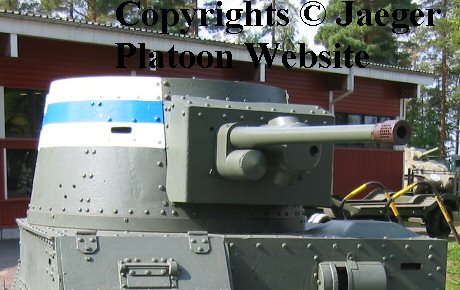
PICTURE: 37 Psv.K/36 tank gun in Vickers 6-ton tank. Notice armored protective cover for
M/09-31 tank machine gun and blue stripe used as country indicator during Winter War.
(Photo taken in Panssarimuseo). CLICK THUMBNAIL
TO SEE LARGER PIC (175 KB).
|
Calibre: |
37 mm x 257 R |
||
|
Barrel length: |
L/45 |
||
|
Rate of fire: |
10 shots/minute (practical maximum) |
||
|
Elevation: |
? |
||
|
Muzzle velocity: |
500 - 810 m/sec |
||
|
Magazine: |
None |
||
|
Max. range: |
4500 m |
||
|
Optics: |
optical sight |
||
|
Country of origin: |
Sweden/Finland |
||
|
Ammunition types: |
HE and HE-T |
||
|
APHE, APHE-T, APCBC-T |
|||
|
AP-T |
Finnish use: This tank gun was used in Vickers 6-ton tanks equipped during Winter War in VTT (State Artillery Factory). After Winter War they were replaced with captured 45-mm Soviet tank guns.
This was the tank-gun version of 37 PstK/36 (37 mm antitank-gun M/36) antitank-gun designed by Bofors in Sweden. Like the antitank-gun it was designed by Bofors. The tank gun was known as 37 Psv.K/36 (37-mm tank cannon model 1936) and was a Finnish choice as main gun for Vickers 6-ton tanks ordered from Vickers Armstrong Ltd in year 1936. As with antitank-gun version it was to be manufactured locally, since manufacturing licenses of Bofors designs were obtained from Bofors to VTT (Valtion Tykkitehdas = State Artillery Factory) for this purpose in year 1937. Finland had ordered its 6-ton tanks from Vickers Armstrong without weapons, as according the plan VTT was to manufacture their main guns, while coaxial machinegun and hull submachinegun would also be Finnish-made. February of 1939 order of 33 guns was made to VTT, but first Vickers 6-ton tanks were not equipped with them until December of 1939 and most of the tanks did not receive their guns by end of Winter War. Quite similar tank guns were also used by Polish and Swedish military in their light tanks and in some armoured cars. In addition Landsverk armoured cars delivered to Netherlands before World War 2 had been equipped with similar tank guns. After Winter War (1939 - 1940) Finnish Vickers 6-ton tanks were equipped with captured Soviet 45-mm tank guns and the resulting tank was renamed as T-26E. However this short-lived use in Finnish tanks didn't completely end the use of these tank guns in Finland. After Winter War Finland started building new fortified defence line known as Salpa-line near new eastern border. Some of the bunkers on that line were equipped with modified tank turrets originating from captured BT-2 tanks and were equipped with remaining 37 Psv.K/36 tank guns.
As usual with tank guns, the gun was semiautomatic of sort - after firing a shot it automatically removed cartridge case and breech remained opened for loading of the next shell. It had useful high explosive shell and armour piercing capability comparable to other tank gun designs of the similar caliber introduced in 1930's. This meant that while it in year 1939 it perfectly capable penetrating frontal arch armour of most tanks from reasonable distance, it became ineffective against the new more heavily armoured tank designs introduced during the war.
When these tank guns were ordered the original plan was to equip them with German Zeiss TZF gun sights, but since Germany refused to deliver these due to Molotov-Ribbentrop pact banning Germany from supplying military equipment to enemies of Soviet Union, Finnish military had to find a replacement. The gun sight acquired for them at that time was (presumably British-made) very simple optical sight with only simple crosshair reticle. As to be expected the optical sight was straight-through telescopic sight type. The same sight was used also for coaxial 7.62-mm M/09-31 (tank) machinegun. Needless to say making range-estimation with this sort of gun sight proved difficult. Tank crew members also noted that this sight allowed only very limited field of vision, which made finding targets often difficult and time-consuming. When the gun could be aimed laterally only by rotating the turret and the dials used for aiming it didn't have any helping markings, like elevation settings, this must have further complicated hitting the target. These factors likely all benefited to rather poor combat performance of Finnish Vickers 6-ton tanks during Winter War.
45 mm Soviet tank guns
- 45 Psv.K/32 (45 mm tank gun M/32)
- 45 Psv.K/34 (45 mm tank gun M/34)
- 45 Psv.K/38 (45 mm tank gun M/38)

PICTURE: Captured Soviet 45-mm tank gun in Finnish T-26E tank.
(Photo taken in Panssarimuseo).
CLICK THUMBNAIL TO SEE LARGER PIC (235 KB).
|
Calibre: |
45 mm x 310 R |
||
|
Barrel length: |
L/46 |
||
|
Rate of fire: |
7 - 12 shots/minute (practical maximum) |
||
|
Elevation: |
-6 degrees / +22 degrees |
||
|
Muzzle velocity: |
330 - 750 m/sec |
||
|
Magazine: |
None |
||
|
Max. range: |
4200 m |
||
|
Optics: |
Soviet M/30 or TOP gun sight (*) |
||
|
Country of origin: |
Soviet Union |
||
|
Ammunition types: |
Soviet APBC-T 1430 g projectiles 760 m/s |
||
|
Finnish APC-T 1400 g projectile 750 - 760 m/s (1942) |
|||
|
HE 2135 g projectile 340 m/sec |
|||
|
Canister shot (Soviet Shch-210, rare) |
(*) M/30 sight was typically used in T-26 tanks, while TOP sight was mostly used in captured BT-5 and BT-5. Most vehicles had also PT-1 or PT-4 aiming periscope with aiming reticle, but according Finnish experiences they were quite useless compared to normal gun sight.
Finnish use: Most numerous tank gun in Finnish use during World War 2. Used in captured Soviet T-26B, T-26C, BT-5, BT-7 and T-50 tanks, Finnish-equipped T-26E tanks, and also in BA-3, BA-6, BA-10 and BA-10M heavy armoured cars.
Armour Penetration:
- "Guns vs Armour website" by D.M. Honner (BR-250 and BR-240 APBC-T, 760 m/sec):
|
distance |
hitting angle |
penetration |
|
100 m |
90 degrees |
52 mm |
|
500 m |
90 degrees |
43 mm |
|
1000 m |
90 degrees |
35 mm |
|
1500 m |
90 degrees |
28 mm |
|
2000 m |
90 degrees |
23 mm |
|
100 m |
60 degrees |
43 mm |
|
500 m |
60 degrees |
35 mm |
|
1000 m |
60 degrees |
28 mm |
|
1500 m |
60 degrees |
23 mm |
|
2000 m |
60 degrees |
19 mm |
- "Punaiset panssarit" Finnish APC-tracer (750 m/sec):
|
distance |
hitting angle |
penetration |
|
500 m |
90 degrees |
47 mm |
"Punaiset panssarit" Soviet APBC-T (760 m/sec):
|
distance |
hitting angle |
penetration |
|
500 m |
90 degrees |
53 mm |
|
1000 m |
90 degrees |
40 mm |
|
1500 m |
90 degrees |
30 mm |
|
500 m |
60 degrees |
44 mm |
|
1000 m |
60 degrees |
33 mm |
|
1500 m |
60 degrees |
25 mm |
|
500 m |
30 degrees |
16 mm |
|
1000 m |
30 degrees |
12 mm |
|
1500 m |
30 degrees |
9 mm |
Finnish live fire testing year 1943 ("45 psa - Vj4", Finnish APC-T, 760 m/sec):
|
distance |
hitting angle |
penetration |
|
100 m |
70 degrees |
57 mm |
|
200 m |
70 degrees |
55 mm |
|
300 m |
70 degrees |
53 mm |
|
400 m |
70 degrees |
52 mm |
|
500 m |
70 degrees |
50 mm |
|
600 m |
70 degrees |
48 mm |
|
800 m |
70 degrees |
45 mm |
|
1000 m |
70 degrees |
42 mm |
|
1500 m |
70 degrees |
35 mm |
|
2000 m |
70 degrees |
28 mm |
|
2500 m |
70 degrees |
22 mm |
Year 1932 the Soviets introduced not only 45-mm antitank-gun, but also 45-mm tank gun, which was known in factory designation 20K. In 1930's this gun became the standard Soviet tank gun used in large variety of tanks and armoured cars. It remained continuously in production until year 1943 and by the time production ended about 29,700 guns had been made. As with 45-mm antitank-guns also these tank guns were further developed during their manufacturing. Also as with 45-mm antitank-guns the first version (M/1932) lacked effective semi-automatic breech mechanism (capable removing the used cartridge case after firing a shot and breech remaining open for the next round). This semi-automatic loading process was based to inertia, which heavier but notably slower high explosive shells failed to provide in Pst.K/32 version. Hence its breech mechanism worked as intended way with rounds that had antitank shells, but not with rounds equipped with high explosive shells. The improved breech mechanism with improving allowing this was introduced with 45-mm tank guns (45 Psv.K/34) in year 1935 and made a notable difference in maximum rate of fire possible. These tank guns had similar barrel length (L/45) as 45-mm antitank-guns and used same ammunition - therefore they had also identical ballistics and armour penetration capability.
During Winter War (1939 - 1940) and Continuation War (1941 - 1944) Finnish Army captured large number of Soviet armoured vehicles equipped with these guns. Finnish Army reissued over hundred Soviet tanks and over two dozen heavy armoured cars equipped with them. Shortly said during World War 2 captured 45-mm Soviet tank guns were the most numerous tank guns in Finnish use. Soviet manufactured tanks in Finnish use equipped with these guns included BT-5, BT-7, T-50 and variety of captured T-26 tanks. The Soviet-manufactured armoured cars in Finnish use and equipped with the same guns included BA-3, BA-6 and BA-10 armoured cars. In addition to all these Soviet-manufactured vehicles after Winter War the Finns equipped all their remaining (25) Vickers 6-ton tanks with these guns and coaxial DT-machineguns - the resulting tank was named as T-26E. With these armoured vehicles captured 45-mm Soviet tank guns served Finnish Army until year 1960. Soviet 45-mm tank guns used the same 45 mm x 310 R ammunition as antitank-guns and had similar ballistics.
Finnish Army divided 45-mm tank guns as three separate models:
Besides being used with armoured vehicles, year 1944 Finnish Army used 45-mm tank guns also in Salpa-line. That year several dozen turrets originating from captured Soviet armoured vehicles were added to bunkers of the particular defence line. In this use the turrets retained their original armament - 45-mm tank gun and 7.62-mm coaxial DT-machinegun. After Winter War the Finns developed also a 45-mm bunker gun, which was based to captured Soviet tank guns of the similar caliber, but was quite different from technical aspect.
The gun-sight that Finnish Army used with captured 45-mm tank guns was their original Soviet m/30 (TOP-1/Tol) gun-sight. It was the usual straight-through telescopic sight and in addition of 45-mm was also used for coaxial 7.62-mm DT-machinegun. The reticle has their sets of markings for armour piercing shells, high explosive shells and coaxial machinegun, which provided the correct reference points for shooting to various ranges. The reticle has these reference points for armour piercing shells for every 100 meters, for high explosive shells for every 50 meters and for coaxial machinegun to distances of 400, 600, 800 and 1000 meters.
Finnish Army ammunition manuals list following ammunition for captured 45-mm antitank- and tank-guns:
Ammunition used in 45-mm tank-guns was obviously fixed rounds type. It's important to notice that Soviet 45-mm tank guns had been originally primarily intended to use ammunition, which had electrical primers. However ammunition equipped with normal percussion primers and intended for antitank-guns could also used be with them, because the guns were also equipped with kinetic striker.
About half of the ammunition used by the Finns with 45-mm guns was captured, while the other half was Finnish made. Finnish production for APHE-tracer ammunition started in VTT (Valtion Tykkitehdas = State Artillery factory) in late 1940 and production of HE ammunition started in 1942. Finnish wartime production for these guns totalled almost 112,000 AP-tracer shells and over 358,000 HE-shells. In addition 15,000 HE-shells and 15,000 APHE-shells were bought from Germany in 1944. Soviet ammunition inventory for these guns included also APCR shells, but captured APCR ammunition is not listed in Finnish ammunition manuals. So it is quite possible that none or only very small number was captured. Anyway Soviet production of APCR-ammunition for these guns doesn't seem to have started until year 1942, at which point the Finnish attack had stopped and capturing large amount of Soviet equipment had become rare.
75 Psv.K/40
(75 mm tank gun M/40)
(German 7.5 cm StuK 40 L/48)
(German 7.5 cm KwK 40 L/48)
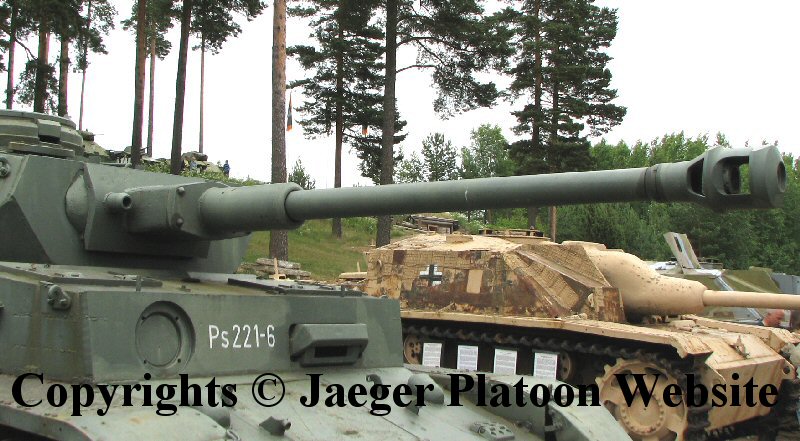
PICTURE: 75 Psv.K/40 tank gun on turret of PzKw IVJ tank. On the
background is another similar gun installed to Stu 40 G assault gun with Saukopf gun mantle. White and blue roundel
visible in tank turret is Finnish post year 1945 country indicator. (Photo taken in Panssarimuseo).
CLICK THUMBNAIL TO SEE LARGER PIC (207 KB).
|
Calibre: |
75 mm x 495 R |
||
|
Barrel length: |
L/48 |
||
|
Rate of fire: |
10 - 15 shots/minute |
||
|
Elevation: |
Stu 40G: -6 degrees / + 20 degrees |
||
|
PzKw IVJ: -8 degrees / + 20 degrees |
|||
|
Muzzle velocity: |
440 - 920 m/sec |
||
|
Magazine: |
None |
||
|
Max. range: |
7,700 m |
||
|
Optics: |
Sfl. ZF. 1 (Stu 40G) / T.Z.F.5f (PzKw IVJ) |
||
|
Country of origin: |
Germany |
||
|
Ammunition types: |
HE 5750 g projectile 500 m/sec |
||
|
APCBC-HE-T 6800 g 750 m/s |
|||
|
HEAT-T 4600 g 450 m/sec (rare) (*) |
|||
|
APCR-T 4100 g 920 m/sec (very rare) (*) |
(*) Both HEAT-T and APCR-T were rare with no more than few rounds issued per assault gun or tank and presumably saved for those situations in which APHE-T was not considered sufficient. HEAT-T was German Hl/B-type and added to Finnish ammunition manuals in October of 1943, while APCR-T was German PzGr. 40 and was added to Finnish manuals in July of 1943.
Finnish use: Finnish military used this tank gun with Stu 40 G assault guns and PzKw IVJ tanks.
Armour Penetration:
- "Guns vs Armour website" by D.M. Honner (PzGr. 39 APHE-T, 750 m/sec):
|
distance |
hitting angle |
penetration |
|
100 m |
60 degrees |
106 mm |
|
500 m |
60 degrees |
96 mm |
|
1000 m |
60 degrees |
85 mm |
|
1500 m |
60 degrees |
74 mm |
|
2000 m |
60 degrees |
64 mm |
- "Guns vs Armour website" by D.M. Honner (PzGr. 40 APCR-T, 920 m/sec):
|
distance |
hitting angle |
penetration |
|
100 m |
60 degrees |
143 mm |
|
500 m |
60 degrees |
120 mm |
|
1000 m |
60 degrees |
97 mm |
|
1500 m |
60 degrees |
77 mm |
- "Guns vs Armour website" by D.M. Honner (Gr. 48 Hl/B HEAT-T, 450 m/sec):
|
distance |
hitting angle |
penetration |
|
all |
60 degrees |
75 mm |
German tank gun used in Stu 40 G assault guns and PzKw IVJ tanks. Finland bought 59 Stu 40 G assault guns from Germany in 1943 - 1944 and 15 PzKw IVJ tanks in year 1944. This Rheinmetall-Borsig manufactured tank-gun used fixed ammunition equipped with electrical primers. While it was variant of 75 PstK/40 antitank-gun, the ammunition it used had shorter bottle-neck type cartridge cases, while antitank-gun ammunition had straight cartridge cases. However this did not show its ballistics and armour penetration capability, which were very similar to one of 75 PstK/40 antitank-gun. This tank gun had electric firing system and semi-automatic breech system (which automatically removed used cartridge cases) with vertical falling breech block. During manufacturing variety of muzzle-brake designs were installed to these guns. While the Germans separated the version used in tanks (7.5 cm KwK 40 L/48) and the version used in assault guns (7.5 cm StuK 40 L/48) as separate gun models, Finnish Army named both versions as 75 Psv.K/40 (75-mm tank gun model 1940). Main gun optics used in these armoured vehicles:
Finnish tank crews noted that from all armoured fighting vehicles in Finnish use during World War 2, Stu 40 G was the one that had the best optics.
Ammunition used with these 75-mm tank guns was all German-manufactured. APHE (PzGr. 39) round was the typical ammunition type used against enemy armoured vehicles. HEAT-T (Gr. 38 Hl/B) was delivered to Finland in smaller numbers than APHE-T and HE (Sprgr. 34) rounds, while APCR-T (PzGr. 40) rounds were even scarcer in Finnish use (only 236 rounds delivered, all of them in August - September 1943). Ammunition that Finnish Army used with this tank gun:
76 Psv.K/27
(76 mm tank gun M/27)
(Soviet 76-mm tank gun L-10)

PICTURE: 76 PsvK/27 (Soviet L-10) tank gun on main turret of T-28E tank R-48. (Photo taken in
Panssarimuseo). Partially visible overpainted black swastika with white highlights was
Finnish country marking for tanks during Continuation War. CLICK THUMBNAIL TO SEE LARGER PIC (161 KB).
|
Calibre: |
76.2 mm x 385 R |
||
|
Barrel length: |
L/26 |
||
|
Rate of fire: |
12 shots/minute |
||
|
Elevation: |
-10 degrees / +40 degrees |
||
|
Muzzle velocity: |
555 - 610 m/sec |
||
|
Magazine: |
None |
||
|
Max. range: |
? m |
||
|
Optics: |
T0D-6 |
||
|
Country of origin: |
Soviet Union |
||
|
Ammunition types: |
HE 6.23-kg 555 m/sec |
||
|
APHEBC-T 6.3-kg 610 m/sec |
|||
|
possibly also APC-T (1942) and HEAT-T (1944) |
Finnish use: During World War 2 Finnish Army used 7 captured T-28 tanks, which were all equipped with these guns.
Finnish live fire tests (76 vpstkr 23/39-ps MD-5 ps MD-5-23/29-Vj APHEBC-T shell 611 m/sec)(*):
|
distance |
hitting angle |
penetration |
|
100 m |
90 degrees |
63 mm |
|
500 m |
90 degrees |
61 mm |
|
1000 m |
90 degrees |
51 mm |
(*) Soviet BR-350A APHE-T shell.
- "Guns vs Armour website" by D.M. Honner (Soviet BR-350A APHEBC-T, 558 m/sec):
|
distance |
hitting angle |
penetration |
|
500 m |
90 degrees |
61 mm |
|
1000 m |
90 degrees |
50 mm |
Soviet tank gun used in captured T-28 medium tanks. Two T-28 tanks were captured in Winter War and during first year of Continuation War (1941) five more captured T-28 were taken to Finnish use, bringing the total number in Finnish use to seven tanks. The Soviets introduced L-10 tank gun year 1938, when it replaced less powerful KT28 as main gun of T-28 medium tank. Finnish Army only used L-10 guns in all T-28 tanks that it operated. This tank gun had the usual semi-automatic breech system (which automatically removed used cartridge cases) with vertical falling breechblock. Buffer and recuperator were part of the same system and worked in unison. Main sight used with this gun was telescopic sight TOD-6, which had 2.5X magnification and field of view of only 15 degrees. In typical Soviet manner of that time the gun could be used also with PT-6 periscopic sight, which had similar 2.5X magnification but slightly larger field of view of 26 degrees. Finnish Army called L-10 gun 76 Psv.K/27 (76-mm tank gun model 1927), although sometimes it was also referred as "76-mm shortened tank gun". While still an excellent tank gun in 1939, this gun soon lost its edge against with appearance of new medium and heavy tanks. With its normal APHE-T ammunition this gun wasn't much less effective than F-34 with its similar ammunition, but still too weak against new tanks. Finnish military was aware that it had very little chance of penetrating new Soviet medium and heavy tanks like T-34, KV-1 or IS-2, but it remained in Finnish combat use with T-28E tanks to summer of 1944. Hence up-gunning T-28 would have made sense, but this never happened. This was probably at least partly because T-28E was already considered obsolete tank anyway and according plans would have been replaced with more modern tanks (mainly PzKw IVJ). Like all Soviet 76-mm tank guns also this gun used fixed ammunition of 76.2 mm x 385 R caliber.
Ammunition-wise it is difficult say for sure what sort of ammunition Finnish Army used with L-10 tank guns. Basically only thing that can be said for certain is that high explosive (HE) and armour piercing high explosive tracer (APHE-T) were used. Finnish ammunition inventory contained large variety of HE-shells, but since there is no real large practical difference between them, the question concerning what sort of antitank-ammunition was used is far more interesting. Finnish inventory includes following captured Soviet APHE-T rounds, which apparently were all suitable for this gun:
Notice: while all these three APHE-T rounds were included to Finnish artillery ammunition manuals 1st of May 1942, it is likely that BR-350 and BR-350A were captured already during Winter War, since they were already in Soviet use at that time. BR-350 may even have been removed from Soviet use by 1941. Since production of BR-350B started only 1942, it may have indeed been captured by Finnish Army only that year and probably not used with L-10 guns.
Still, maybe the most interesting question if Finnish Army issued AP-T ammunition and HEAT-T ammunition for this tank gun. Both AP-T round (76 psa-Vj4) introduced in late 1942 and HEAT-T rounds (76 hkr 42-18/42-38 is 38-18/24 and 76 hrk Vj 42/C-18/24-38 is 38-18/24) introduced in June - July 1944 had more armour penetration than Soviet APHE-T shells. There is no certainty about the matter, but wartime test results with field guns suggest that AP-T would have been only somewhat more effective than the Soviet APHE-T shells. On the other hand HEAT-T round was capable to much better performance especially from long range - estimated armour penetration (with 90-degree hit angle) would have been about 80-mm from all distances. Considering Finnish Army bothered to have HEAT-T manufactured and issued for large variety of field guns and even some infantry guns, it seems likely that it may have been issued also for tank guns in 1944. However there is no certainty about this at this moment.
76 Psv.K/F-34
(76 Psv.K/32 / 76 mm tank gun M/32)
(76 Psv.K/41 / 76 mm tank gun M/41)
(76 Psv.K/42 / 76 mm tank gun M/42)
(76 Psv.K/43 / 76 mm tank gun M/43)
(Soviet 76-mm tank gun F-34 / model 1940)

PICTURE: Soviet 76-mm tank gun F-34 of T-34 model 1943 Ps. 231-7. (Photo taken in
Panssarimuseo). CLICK THUMBNAIL TO SEE LARGER PIC (235 KB).
|
Calibre: |
76.2 mm x 385 R |
||
|
Barrel length: |
L/41.6 |
||
|
Rate of fire: |
3 - 8 shots/minute or 6 - 15 rounds/minute (*) |
||
|
Elevation: |
-5 degrees / +28 degrees |
||
|
Muzzle velocity: |
11,200 m/sec |
||
|
Magazine: |
None |
||
|
Max. range: |
? m |
||
|
Optics: |
TMFD-7 main sight and PT-4-7 periscopic sight |
||
|
Country of origin: |
Soviet Union |
||
|
Ammunition types: |
HE |
||
|
APHEBC-T 6.3-kg 680 m/sec |
|||
|
possibly also APC-T (1942) and HEAT-T (1944) |
(*) Rate of fire of F-34 main gun was severely limited by poor ammunition storage arrangements in early T-34 tanks after the few rounds easily accessible had been spent. The gun itself allowed rate of fire as high as 6 - 15 rounds per minute.
- "Punaiset Panssarit", Soviet live fire tests (Soviet APHEBC-T, likely BR-350A or BR-350B, 655 m/sec):
|
distance |
hitting angle |
penetration |
|
500 m |
90 degrees |
69 mm |
|
1000 m |
90 degrees |
61 mm |
|
1500 m |
90 degrees |
54 mm |
|
500 m |
60 degrees |
57 mm |
|
1000 m |
60 degrees |
50 mm |
|
1500 m |
60 degrees |
45 mm |
- "Punaiset Panssarit", Soviet live fire tests (Soviet APCR-T, likely BR-350P, 680 m/sec):
|
distance |
hitting angle |
penetration |
|
500 m |
90 degrees |
92 mm |
|
1000 m |
90 degrees |
60 mm |
|
500 m |
60 degrees |
57 mm |
|
1000 m |
60 degrees |
50 mm |
Notice: BR-350P APCR round entered Soviet production not earlier than year 1943 and the fact that is missing from Finnish ammunition manuals suggests that it did not see Finnish use. Hence I wanted to provide this data mainly to give some reference for those looking what the Soviet made late date ammunition could do.
- "Guns vs Armour website" by D.M. Honner (Soviet BR-350A APHE-T, 655 m/sec):
|
distance |
hitting angle |
penetration |
|
500 m |
90 degrees |
90 mm |
|
1000 m |
90 degrees |
60 mm |
Soviet tank gun of captured T-34/76 tanks used by Finnish Army. Four of these captured tanks were taken to Finnish use during Continuation War and three more bought from Germany in year 1944, bringing the total in Finnish use during the war to seven tanks. Repairs of two additional T-34/76 were completed only after ending of the war resulting the total number of T-34/76 tanks in Finnish use being nine tanks. Ballistics-wise this tank-gun developed by development team lead by V.G. Grabin Factory 92 in Gorki was more effective than previous Soviet 76-mm tank guns and indeed when introduced to production in year 1941 it was likely the best tank gun available at that time. System-wise it had the usual semi-automatic breech system (taking care of removing used cartridge cases) and typical vertical falling breech block. This gun was developed specifically for T-34 main tank and also specifically for mass-production in massive numbers. Development of the gun continued also during production resulting better easier to manufacture with lesser number of parts and smaller production cost. While designed to use ammunition with electric primers, the gun had also kinetic striker system which allowed using ammunition equipped with normal primers.
In typical Soviet World War 2 era manner T-34 tanks equipped with F-34 gun had two gun sights - telescopic main gun sight TMFD-7 and aiming periscope PT-4-7. Both of these were less than ideal. TMFD-7 has 2.5X magnification with only 15 degree field of view, which made quickly finding targets complicated. PT-4-7 periscopic sight could be rotated 360 degrees and somewhat better 26-degree field of view had also 2.5X magnification, which according Finnish experiences, made estimating range to target difficult. While F-34 gun would have otherwise allowed higher rate of fire, the poorly planned placement of ammunition with-in tank limited the rate of fire. Only nine rounds were stored in easily accessible ammunition racks with rest of the ammunition placed in ammunition boxes in floor of the turret and covered by rubber carpet. This may have been one reasons, why (as suggested by Lehväslaiho is his two non-fictional books listed above) Finnish T-34 crews may have preferred to keep some open ammunition boxes containing main gun ammunition inside turret. As all Soviet 76-mm tank guns, also this gun used fixed ammunition of 76.2 mm x 385 R caliber. This gun was also the starting point from which Grabin's team later designed ZiS-5 tank gun, which was introduced for KV-1 tank in year 1941.

PICTURE: Photos showing breech parts of F-34 and ZiS-5 tank guns set side by side for comparison. It is quite
easy to see many similarities of these two tank gun models. (Photo taken in Museum of Artillery, Sappers and Signal Corps, St.
Petersburg Russia). CLICK THUMBNAIL TO SEE LARGER PIC (200 KB).
For some reason early on Finnish Army named F-34 tank gun as 76 Pst.K/32 (76-mm tank gun model 1932) and this name appears sometimes in Finnish military documents written in 1941 - 1943. Around 1944 F-34 tank guns were also sometimes referred as model 1941, model 1942 and model 1943 depending year they had been manufactured. By late 1944 the error had apparently been noted with F-34 tank guns being listed as 76-mm tank gun model 1941, model 1942 or model 1943 depending year of manufacture and Finnish manual (based to Finnish and German intelligence) listing the gun as 76-mm tank gun model F-34. The Soviets used high explosive (HE), armour piercing high explosive (APHE), armour piercing with tungsten core (APCR) and high explosive anti-tank (HEAT) ammunition for with this tank gun.
As with other Soviet 76-mm tank guns, exactly what ammunition Finnish military used with this gun remains uncertain. The rather obvious part that exists is that at least some high explosive shells (HE) and armour piercing high explosive tracer (APHE-T) ammunition was issued for it. There is reason to think that at least captured BR-350A and BR-350B APHE-T rounds belonging to three suitable APHE-T rounds that can be found in Finnish ammunition manuals (listed here) were used, but if Finnish-manufactured AP-T and HEAT-T rounds were included to these is uncertain. According estimate based to rough comparison of data gained by live fire testing this ammunition in field guns Finnish AP-T round 76 psa-Vj4 (armour piercing round with 4-second tracer) introduced late 1942 should have been able to easily produce results better than Soviet BR-350P APCR-round. Rough estimate suggests (*) about 640 m/sec muzzle velocity with armour penetration of about 105-mm from distance of 100 meters at 70 degree hitting angle. Finnish HEAT-T round introduced in summer of 1944 is another round that may have been used also with this gun, but again there is no certainty. If used HEAT-T round with its armour penetration of about 75-mm from all ranges would have given Finnish T-34 a more capable ammunition alternative for long-range shots. Considering Finnish ammunition manuals do not list electric primers for 76.2 mm x 385 R cartridge cases, apparently all ammunition that Finnish Army used with Soviet 76-mm tank guns was equipped with normal primers. The fact that Finnish ammunition manuals do not even mention Soviet APCR and HEAT ammunition suggests, that these were not captured in any real numbers.
(*) When fired from L/30 barrel this projectile could do 95-mm with muzzle velocity of 590 m/sec). With L/51.1 barrel and 688 m/sec muzzle velocity it could penetrate already 115-mm of armour. Both these values are from distance of 100 meters with 70-degree angle of impact.
76 Psv.K/34
(76 mm tank gun M/34)
(Soviet 76-mm tank gun F-32)

PICTURE: 76 PsvK/34 (Soviet F-32) tank gun on main turret of KV-1E model 1940. (Photo taken in Panssarimuseo).
CLICK THUMBNAIL TO SEE LARGER PIC (92 KB).
|
Calibre: |
76.2 mm x 385 R |
||
|
Barrel length: |
L/31.5 |
||
|
Rate of fire: |
3 - 8 shots/minute |
||
|
Elevation: |
-5 degrees / +25 degrees |
||
|
Muzzle velocity: |
? m/sec |
||
|
Magazine: |
None |
||
|
Max. range: |
? m |
||
|
Optics: |
TOD-6 main sight and PT-6 periscopic sight |
||
|
Country of origin: |
Soviet Union |
||
|
Ammunition types: |
HE 6.23-kg 610 m/sec |
||
|
APHEBC-T 6.3-kg 612 m/sec |
|||
|
APC-T (1942) and HEAT-T (1944) may also have been used. |
Finnish use: Used with only one KV-1E model 1940 that was taken to Finnish use.
- "Guns vs Armour website" by D.M. Honner (Soviet BR-350A APHE-T, 612 m/sec):
|
distance |
hitting angle |
penetration |
|
500 m |
90 degrees |
60 mm |
|
1000 m |
90 degrees |
52 mm |
Soviet F-32 tank gun was the gun, which Finnish Army used in captured KV-1E m 1940 heavy tank. This tank gun was designed by design team of V.G. Grabin. In later KV-1 heavy tanks it was replaced with more powerful, cheaper and easier to manufacture ZiS-5 tank gun. In usual manner KV-1E model 1940 had two optional sights for its main gun - optical telescopic main sight and periscopic sight. TOD-6 optical telescopic gun sight had 2.5X magnification and field of view of just 15 degrees, while periscopic sight PT-6 had 2.5X magnification and 26 degree field of view. Only one KV-1 model 1940 tank was taken to Finnish use.
When it comes to ammunition used with this tank gun, as with other Soviet 76-mm tank guns only ammunition types which Finnish Army is known to have used with them for certain are high explosive (HE) and armour piercing high explosive tracer (APHE-T) rounds. Finnish Army introduced more powerful AP-T round (year 1942) and HEAT-T round (year 1944) for field guns that used also 76.2 mm x 385 R ammunition, but it remains unverified if these rounds were issued also for tank guns. If issued AP-T round would likely been capable of penetrating about 95-mm of armour in 70-degree angle from 100 meters (compared to 76 K/02 field gun, which had gun barrel of almost similar length).
76 Psv.K/39
(76 mm tank gun M/39)
(Soviet 76-mm tank gun ZiS-5 / model 1941)

PICTURE: 76 PsvK/39 (Soviet ZiS-5) tank gun on main turret of KV-1 model 1942. (Photo taken in
Panssarimuseo). CLICK THUMBNAIL TO SEE LARGER PIC (178 KB).
|
Calibre: |
76.2 mm x 385 R |
||
|
Barrel length: |
L/41.6 |
||
|
Rate of fire: |
4 - 8 shots/minute |
||
|
Elevation: |
-5 degrees / +28 degrees |
||
|
Muzzle velocity: |
- m/sec |
||
|
Magazine: |
None |
||
|
Max. range: |
11,200 m |
||
|
Optics: |
TMFD-7 main sight and PT-4-7 periscopic sight |
||
|
Country of origin: |
Soviet Union |
||
|
Ammunition types: |
HE |
||
|
APHEBC-T 6.3-kg 655 m/sec |
|||
|
APC-T (1942) and HEAT-T (1944) may also have been used. |
Finnish use: Soviet tank gun for captured KV-1 m 1942 heavy tank. Finnish Army used only one of these tanks, hence this tank gun was also one of its kind in Finnish use.
- "Guns vs Armour website" by D.M. Honner (BR-350A APHEBC-T, 655 m/sec):
|
distance |
hitting angle |
penetration |
|
100 m |
90 degrees |
88 mm |
|
500 m |
90 degrees |
69 mm |
|
1000 m |
90 degrees |
60 mm |
|
2000 m |
90 degrees |
48 mm |
- "Guns vs Armour website" by D.M. Honner (BR-350P APHEBC-T, ? m/sec):
|
distance |
hitting angle |
penetration |
|
500 m |
90 degrees |
90 mm |
|
1000 m |
90 degrees |
60 mm |
Soviet tank gun based to earlier F-34 tank gun and developed for smaller turret of KV-1 tanks. It was introduced with KV-1 model 1941 heavy tanks. Finnish Army had only one of these guns in its use, the particular gun had been captured with KV-1 model 1942 heavy tank with which it was used. For some reason Finnish Army named this particular gun as 76 Psv.K/39 (76-mm tank gun M/39) while the Soviets knew it as ZiS-5 or 76-mm tank gun model 1941. As other Soviet tanks of this era it had semi-automatic breech system with falling vertical breechblock and used fixed ammunition. Also like them, it had been designed to use ammunition with electric primers, but had also mechanical striker for ammunition equipped with normal strike-activated primers. Main sight was TMFD-7 optical telescopic sight with usual 2.5X magnification and 15-degree field of view. The tank had also PT-4-7 periscopic sight with 2.5X magnification and 26-degree field of view.

PICTURE: Photo showing Soviet ZiS-5 tank gun. (Photo taken in Museum of Artillery, Sappers and Signal Corps, St.
Petersburg Russia). CLICK THUMBNAIL TO SEE LARGER PIC (95 KB).
Ballistics-wise this gun was similar to F-34 tank gun used in T-34/76 tanks. As usual there is no exact information about ammunition that Finnish Army used with it. Only ammunition types used for certain are high explosive (HE) and armour piercing high explosive tracer (AHPE-T) rounds. If Finnish-manufactured AP-T (introduced 1942) and HEAT-T (introduced 1944) for field guns that used 76.2 mm x 385 R ammunition was also used with this tank gun remains unverified.
85 Psv.K/44
(85 mm tank gun M/44)
(Soviet 85-mm tank gun ZiS-S-53)

PICTURE: 85 PsvK/44 (Soviet ZiS-S-53) tank gun of T-34/85. (Photo taken in
Panssarimuseo). CLICK THUMBNAIL TO SEE LARGER PIC (175 KB).
|
Calibre: |
85 mm x 627 R |
||
|
Barrel length: |
L/54.6 |
||
|
Rate of fire: |
6 - 10 shots/minute |
||
|
Elevation: |
-5 degrees / +25 degrees |
||
|
Muzzle velocity: |
785 - 792 m/sec |
||
|
Magazine: |
None |
||
|
Max. range: |
12,900 m |
||
|
Optics: |
TSh-16 optical telescopic sight |
||
|
Country of origin: |
Soviet Union |
||
|
Ammunition types: |
HE 9.60 kg 785 m/sec |
||
|
APHEBC-T 9.20-kg 792 m/sec |
Finnish use: Main gun for captured Soviet T-34/85 medium tanks. Nine of these tanks were captured by Finnish Army in summer - autumn of 1944 with seven of them being taken to Finnish use.
- "Guns vs Armour website" by D.M. Honner (BR-365 APHEBC-T, 792 m/sec):
|
distance |
hitting angle |
penetration |
|
100 m |
90 degrees |
119 mm |
|
500 m |
90 degrees |
111 mm |
|
1000 m |
90 degrees |
102 mm |
|
1500 m |
90 degrees |
93 mm |
|
2000 m |
90 degrees |
85 mm |
|
100 m |
60 degrees |
97 mm |
|
500 m |
60 degrees |
90 mm |
|
1000 m |
60 degrees |
85 mm |
|
1500 m |
60 degrees |
75 mm |
|
2000 m |
60 degrees |
70 mm |
- Finnish Army translation of Soviet wartime manual for 85-mm tank guns (BR-365 APHEBC-T):
|
distance |
hitting angle |
penetration |
|
100 m |
90 degrees |
119 mm |
|
250 m |
90 degrees |
114 mm |
|
500 m |
90 degrees |
111 mm |
|
500 m |
90 degrees |
107 mm |
|
1000 m |
90 degrees |
102 mm |
|
1500 m |
90 degrees |
93 mm |
|
2000 m |
90 degrees |
85 mm |
|
2500 m |
90 degrees |
77 mm |
|
3000 m |
90 degrees |
70 mm |
|
100 m |
60 degrees |
97 mm |
|
250 m |
60 degrees |
94 mm |
|
500 m |
60 degrees |
91 mm |
|
750 m |
60 degrees |
87 mm |
|
1000 m |
60 degrees |
83 mm |
|
1500 m |
60 degrees |
76 mm |
|
2000 m |
60 degrees |
69 mm |
|
2500 m |
60 degrees |
63 mm |
|
3000 m |
60 degrees |
57 mm |
This was the standard tank gun for Soviet T-34/85 model 1944 medium tank, nine of which Finnish Army took to its own use in summer - autumn of 1944. First production run of T-34/85 manufactured in year 1943 had been equipped with earlier 85-mm D-5T gun, but sources and period photos suggest that all Finnish-used T-34/85 tanks had Zis-S-53 guns. This gun was used with TSh-16 optical telescopic sight, which had 4X magnification with 16-degree field of view. Unlike earlier Soviet medium tanks it no longer had the secondary periscopic sight, which the Finnish tank crews had found quite useless. Unlike earlier Soviet telescopic tank gun sights, TSh-16 was what is called articulated telescopic sight. The meaning of this is that unlike earlier Soviet telescopic sights for tank guns, it had an optical hinge that allowed rear part of the sight to elevated or depressed, so that gunner could keep his head in the height no matter what the gun elevation was. As usual ammunition was fixed type with electric primers that could also be fired with normal mechanical striker. Same ammunition was also used in Soviet 85-mm anti-aircraft gun model 1939 (KS-12 / 52-K). Recoil recuperator was over the gun. In usual manner the gun has semi-automatic breech system with falling vertical breechblock. The reason why the Soviets developed this tank gun was introduction of new generation of heavily armoured German tanks (Tiger I and Panther) introduced in 1942 - 1943, that they were almost impossible to destroy with existing 76-mm ZiS-5 and F-34 tank guns. Around the same time the Germans had also increased armour protection of their PzKw IV tanks and Stu 40 G assault guns. Hence the Soviets started the development of more powerful tank guns and took existing 85-mm anti-aircraft gun model 1939 (KS-12 / 52-K) as starting point of this development work. They had two development teams developing the new 85-mm tank gun - F.P. Petrov's team and V.G. Grabin's team, both of them in Gorki Artillery Factory number 92. Petrov's team succeeded first developing D-5 gun, which was used in SU-85 assault gun and whose version D-5T was also used in early production version of T-34/85 tank. When D-5T was tested against ZiS-53 tank developed by Grabin's, ZiS-53 proved to be superior, but by that time T-34/85 turret had designed for D-5T gun and ZiS-53 didn't fit into it. The development work made for ZiS-53 tank gun to get it fit into existing T-34/85 tank was lead by A. Savin, whose initial (S) was added to name of the completed gun - ZiS-S-53. The resulting gun 85-mm ZiS-53 tank gun was somewhat more effective than ealier 76-mm Soviet tank guns, but armour-penetration wise not terribly more effective. Still, the improved performance was considered sufficient to give T-34/85 a fighting chance against new German tanks.
Since there were no other sources of 85 mm x 627 R ammunition, Finnish Army was forced to rely solely to ammunition captured with Soviet tanks. Since these nine tank guns were only 85-mm guns in Finnish use, there was no domestic ammunition production in this caliber and the Germans were not able to supply any either (considering they relined their captured 85-mm anti-aircraft guns to 88-mm caliber, they may have also lacked production of suitable ammunition). All Finnish-captured ammunition was high explosive (HE) and armour piercing high explosive tracer (APHE-T) type. Only very limited amount of ammunition was captured with these tanks. Finnish records list ammunition captured in battles of Vakkila and Portinhoikka (in Tali-Ihantala) - 248 HE-rounds (O-365 type) and 94 rounds APHE-T (BR-365 type). Due to this dilemma even modifying the ZiS-S-53 guns to 88-mm caliber caliber was suggested. With suitable ammunition such a short supply 29th of September 1944 Finnish military approved plan of testing installing of German 75-mm Psv.K/40 (7.5 cm StuK 40 L/48) tank gun to turret of T-34/85 tank with a bushing system. This was experimented in February of 1945, but test results did not lead into any further actions other than re-equipping the particular tank (T-34/85 Ps. 245-4) with it its original gun. The Soviets had also AP-T and APCR-T rounds for this gun, but apparently there were none in Finnish use.
114 Psv.H/18
(114 mm tank howitzer M/18)

PICTURE: 114 Psv.H/18 tank howitzer of BT-42 assault gun. All optics used in BT-42 were designed to be covered with
protective covers when not in use. The cover for the main gun sight is the high one on the left. (Photo taken in
Panssarimuseo). CLICK THUMBNAIL TO SEE LARGER PIC (185 KB).
|
Calibre: |
114.3 mm x 86 R |
||
|
Barrel length: |
L/15.6 |
||
|
Rate of fire: |
3 - 6 shots/minute? |
||
|
Elevation: |
-5 degrees / +25 degrees |
||
|
Muzzle velocity: |
345 - 350 m/sec |
||
|
Magazine: |
None |
||
|
Max. range: |
? m |
||
|
Optics: |
artillery dial sight (*) |
||
|
Country of origin: |
Great Britain with Finnish modifications. |
||
|
Ammunition types: |
HE 14.40 kg ? m/sec |
||
|
HE 14.90-kg ? m/sec |
|||
|
smoke 16.08-kg ? m/sec |
|||
|
HEAT 13.50-kg 357 m/sec |
(*) Artillery dial sight recycled from 76 K/02 light field gun. These sights had 4X magnification.
Finnish use: Howitzer used in 18 Finnish-built BT-42 assault guns / self-propelled guns.
British World War 1 era 114 H/18 howitzer, which was modified as tank gun in Finland for BT-42 assault gun. Basically this vehicle combined tank chassis of captured Soviet BT-7 tank with 114-mm British howitzer installed to new larger turret designed by State Artillery Factory (Valtion Tykkitehdas) in Finland. 18 of these unsuccessful assault guns were build in 1942 - 1943. The howitzer had muzzle brake, breech system with vertical sliding breech block and artillery dial sight far from ideal for armored vehicle, but useful for indirect fire.
Unlike smaller caliber tank guns this howitzer did not use fixed ammunition, but separately loaded ammunition - in other words the projectile and cartridge case were loaded separately, which was obviously slower and notably reduced maximum rate of fire. In addition there were other factors further reducing it - the ammunition storage was poorly designed and hand-wheels (elevation & traverse) used for laying the gun could not be operated simultaniously. Due to low muzzle velocity only antitank ammunition type that had even theoretical chance of being effective with this howitzer was high explosive anti-tank (HEAT) ammunition relying to shaped charge for penetrating armour. The howitzer proved especially poorly suited for direct-fire and basically useless against other armour vehicles - not least because of HEAT-ammunition, whose performance proved extremely disappointing.
The HEAT-ammunition used in this gun was Finnish-manufactured but apparently directly based into German 105-mm HEAT-ammunition. Summer of 1943 its prototype had been tested against various other HEAT-warhead designs and had proved most successful of the tested designs with capability of reliably penetrating 100-mm steel plate set at 50 degree or 60 degree angle. While test firing suggested that it should have been able to penetrate 110 - 115 mm steel plate in 70 degree angle, battle of Viipuri it proved incapable knocking out Soviet medium tanks, heavy tanks and assault guns. From total number of 2,000 114-mm HEAT-shells ordered apparently only 500 shells of the first order were ever delivered. The second delivery of 1,500 shells was cancelled before delivery. Other ammunition types used with this tank howitzer were two types of high explosive (HE) shells and smoke shell filled with white phosphorus.
Ammunition for 114 Psv.H/18:
152 Psv.K/37
(152 mm tank gun M/37)
(152-mm howitzer ML-20S)

PICTURE: 152 Psv.H/37 tank howitzer of ISU-152 assault gun. (Photo taken in
Panssarimuseo). CLICK THUMBNAIL TO SEE LARGER PIC (194 KB).
|
Calibre: |
152.4 mm x 260 R |
||
|
Barrel length: |
L/32 |
||
|
Rate of fire: |
momentarily 3 - 4 shots/minute, otherwise 2 - 3 shots/minute. |
||
|
Elevation: |
-6 degrees / +18 degrees |
||
|
Muzzle velocity: |
? m/sec |
||
|
Magazine: |
None |
||
|
Max. range: |
6,200 m |
||
|
Optics: |
ST-10 optical sight |
||
|
Country of origin: |
Soviet Union |
||
|
Ammunition types: |
HE 43.2-kg ? m/sec |
||
|
(APHE 40.0-kg ? m/sec) (*) |
(*) Not always carried in ISU-152. Weight with fuse, weight without fuse 38.8-kg.
Finnish use: Used in two Soviet ISU-152 heavy assault guns captured in June of 1944. Only one of these two vehicle saw combat use with Finnish Army and even it only extremely briefly.
This Soviet tank howitzer directly based to towed 152 H/37 howitzer was used as main gun of ISU-152 heavy assault gun. Summer of 1944 Finnish Army captured two of these assault guns. One of the two captured assault guns needed extensive repairs and was modified as salvage vehicle. The another was captured almost intact and immediately taken to Finnish use, but lost already in its first battle with Finnish crew. Due to having separately loaded ammunition, in other words first projectile being loaded and seperate cartridge case being loaded after it, and weight of projectiles used this howitzer had very slow rate of fire. At the same time ISU-152 carried only 20 shells, which was quite limited number for armored fighting vehicle. But on the other hand ammunition-wise this was hard-hitting howitzer, with single direct hit from it being extremely distructive, no matter if the target was "soft" or armored vehicle.

PICTURE: 152 Psv.K/37 main gun of ISU-152 / JSU 152 assault gun "1212". This photo gives some idea about the
massive size of this howitzer. (SA-kuva photo archive, photo number 157919). CLICK THUMBNAIL TO SEE LARGER PIC (178 KB).
What is known suggests that it was typical for the Soviet ISU-152 to carry combination of 13 high explosive (HE) shells and 7 armor piercing high explosive (APHE) shells - or only HE shells. Even normal high explosive shell it fired was deadly against even most heavily armored tanks. What is known suggests that only ISU-152 to see battle in Finnish use carried only high explosive shells.
SOURCES:
Alex Buchner: Deutsche and alliierte heereswaffen 1939 - 1945.
Erkki Käkelä: Marskin Panssarintuhoojat.
Article of Risto Erjola: Ampumatarvikkeet sotien 1939 - 1945 aikana Suomessa (Tiede ja Ase, Suomen sotahistoriallisen vuosiseuran julkaisu N:o 48, 1990).
Pekka Kantakoski: Punaiset panssarit.
Terry Gander and Peter Chamberlain: Small arms, artillery and special weapons of the third reich.
Die Deutschen Kampfwagen Kanonen 1935 - 1945 by Wolfgang Fleischer
Chris Chant: Artillery of World War II.
Die Kampfpanzer der NVA by Walter J. Spielberger, Jörg Siegert and Helmut Hanske.
Ian Hogg: Twentieth-Century Artillery.
Russian Tanks 1900 – 1970 by John Milsom
Reino Lehväslaiho: Panssarisotaa.
Military manual: 45 mm Jv. tykkiopas by Päämaja. (Printed 1940)
Military manual: Ampumatarvikenimikkeistö by Puolustusvoimien Pääesikunta Taisteluvälineosasto (printed 1941).
Military manual: Kenttätykistön ampumatarvikkeet by Puolustusvoimien Pääesikunta Taisteluvälineosasto (printed 1940, updates added until 1947).
Military manual: Jalkaväen Ampumatarvikkeet I by Puolustusvoimien Pääesikunta Taisteluvälineosasto (printed 1941, updated until September 1944).
Finnish Military Archives folder T19052/2
Finnish military archives, archive references T20206/F9, /F10 and /F11
Documents from folder T/20207 /F16 sal in Sota-Arkisto (Finnish Military Archives).
Special thanks to Panssarimuseo (Finnish Armour Museum), Parola.